

Citizens of Nowhere Build Nothing Worth Keeping
We are the wealthiest civilization in human history, yet we build nothing worth keeping. The problem isn't capitalism. It's that we've lost the will to build for anyone other than ourselves.
In 1401, a wealthy Florentine merchant guild held a competition to design new doors for the city's baptistery. They did not need new doors. The old ones worked perfectly well. Florence was a city that believed beauty was an obligation, so they commissioned Lorenzo Ghiberti, paid him well, waited twenty years, and got what was later called the "Gates of Paradise". This guild was not a guild of saints; instead, they were businessmen. That is precisely the point. Modern society has lost something in the way we build, in the way we shape the spaces in which we live, work, and raise children. Our environment forms us more than most know: it shapes how we think, how we feel, and even what we believe we deserve. The culprit for this loss of beauty is often named as capitalism, but this could not be further from the truth. In fact, capitalism may be better than any other economic model for this specific purpose. Instead, the culprit is more broadly a culture that has no home, doesn't care for the future, doesn't reward beauty, and celebrates ugliness. The great buildings of history were not built by saints, nor by socialists; instead, they were built by wealthy people embedded in communities that expected beauty and rewarded its providers. Reviving that model requires not a different economy, but a different culture: one that doesn't just build for the living, but for the not yet born.
The Wrong Diagnosis
We don't build like we used to. This is most often attributed to capitalism: a profit-driven economy compresses timelines, seeks to minimize costs, and frames beauty as a luxury rather than a necessity. Return on investment is prioritized over aesthetic ambition. The observation is fair: a developer building condominiums to rent out in eighteen months has very different incentives than a bishop building a cathedral for God. However, the patronage model that funded the Renaissance and built the most beautiful buildings in human history was never opposed to capitalism; it was an early expression of it. The Medici were famously a family of bankers. The great patrons that made Venice, Genoa, and Antwerp what they are were running financial enterprises. Carnegie was the most ruthless industrialist of the Gilded Age, and he built 2,509 libraries. Rockefeller endowed countless universities and cultural institutions. Vanderbilt built the Breakers. These people, regardless of their ruthlessness, understood something about the relationship between wealth and public beauty that we've entirely forgotten.
The mechanism was never socialism. It wasn't collective state funding (with some exceptions). It was private individuals, motivated by private values, spending private wealth on public and permanent things. That mechanism is not just compatible with capitalism: it is capitalism pointed in a cultural direction. So if the underlying economic model isn't the problem, what is?
The Prestige Economy
Patronage worked because beauty was a vehicle for status. This is not a flaw in the model; it is what made the model work. You don't need good people for patronage to work. You just need to reward their patronage. Commissioning a great building or funding a cathedral, hospital, or library purchased immortality and the gratitude of an entire community across generations. The Medici didn't fund the Renaissance because they loved art; they funded it because it turned wealth into power. Even today, more than 600 years after their peak, the Medici name and family crest can be found across Florence on buildings and countless statues.
That prestige economy no longer exists. Today, a billionaire gets more from funding a foundation named after them or from docking a superyacht in Monaco than from funding something beautiful and permanent in the place that made them. A superyacht is seen by hundreds and serves one, while a great building is seen by millions and serves the city. The social reward no longer exists for local beauty, for serving the place where they were born or built their fortune. Capitalism follows wherever incentives lead, which is nowadays away from beauty and towards efficiency; the glass box office park replaced what might have been landmarks to inspire people for centuries to come.
Rootlessness
There is a deeper problem here causing wealthy people to have little interest in beautifying their hometown or the town where they made their money: wealth today isn't rooted. The great patrons of history were rooted in their respective towns. The Medici were Florentine to their bones. Carnegie's libraries were built in Dunfermline where he was born and Pittsburgh where he made his fortune. These patrons were answerable to those places: they were theirs. They lived and died there, their children and grandchildren grew up there and inherited the name and its reputation. The community's opinion of your last name stuck for generations. Their legacy was local because their life was local. By contrast, the ultra-wealthy today are for the most part citizens of nowhere in particular. They live between Manhattan, London, or the South of France. Their social circle is transnational and they aren't bound to any specific community. This is a side effect of globalism: they don't beautify the street, neighborhood, or city that made them because for most, that place doesn't really exist. Their businesses operate across continents, their children go to international schools across the globe, and they end up with no single place with a strong enough claim on who they are to motivate the kind of investment patronage requires.
Wealthy people aren't the only ones with a role in this issue. Our cultural shift towards placelessness extends beyond the wealthy and affects everyone. Patronage requires not just wealthy patrons but also a local community to receive and celebrate that patronage. Florentine citizens didn't just receive the generosity of their patrons; they took pride in the beauty of their city as an extension of themselves. If ordinary people feel little attachment to their local community, the demand side of patronage is broken as well. People who belong nowhere build nothing worth keeping. Those communities, starved of beauty and continuity with what came before, struggle to find meaning in what surrounds them. When neither the wealthy nor the ordinary citizen feels bound to their community, the entire structure that made patronage possible collapses from both ends. This isn't capitalism; it's a consequence of a world untethered from geography.
The Ideology of Ugliness
Not only did wealthy patrons lose interest in beauty, but so did the institutions built to celebrate and advance it. The cultural establishment decided that beauty was no longer important and should be subverted. In "Ornament and Crime" (1910), Adolph Loos declared that decoration was degenerate and primitive. Movements like Bauhaus reduced buildings to function alone. Le Corbusier called the house a "machine for living in". Together they made a moral argument, not merely an aesthetic one: beauty itself was suspect. The position became the dominant one, carried into every institution that trained architects, approved buildings, and shaped cities.
These weren't just stylistic preferences. They were campaigns to delegitimize the impulse to ornament, to beautify, to build things that exceed their function. The campaign succeeded at the level of institutions such as architecture schools that decided what serious, intelligent, forward-thinking design looked like. The 20th century forced wealthy individuals who wanted to build beautifully to do so in defiance of the establishment. A would-be patron in 1960 couldn't simply hire a different architect; the planning system itself had internalized Modernist assumptions about what legitimate buildings looked like. Every institution with power over the built environment, from planning departments to city councils to development firms, had come to share the same aesthetic assumptions. Patronage dried up partly because the institutions that set taste made beauty unfashionable, leaving potential patrons with no cultural permission to build beautifully without being seen as gaudy or unsophisticated.
Ironically, the Modernist movement presented itself as democratic and functional, building for ordinary people rather than aristocratic taste. Yet it was ordinary people who consistently hated what was built for them. Public housing complexes, brutalist civic centers, stripped and functionless squares: these were imposed on communities that found them depressing and inhuman, justified by an expert class that decided taste was too important to leave to the uneducated. The cultural establishment withdrew its interest in beauty, and the patrons followed. You cannot separate the decline of patronage from the decline of the institutions that once made beauty prestigious and sought after. When the institutions stopped valuing it, the patrons stopped funding it, and the cities stopped expecting it. There are signs, at least, that the consensus is cracking. A generation that grew up surrounded by ugliness is beginning to ask whether it was ever necessary.
Short-Termism
The Cologne Cathedral took over 600 years to build because beautiful buildings are investments in centuries, not quarters. The builders knew that they wouldn't see it finished, but they built it anyway. The builders of the Sagrada Familia, Chartres Cathedral, and the Palace of Versailles were no different. They were building for their grandchildren's grandchildren, for a future they would never be around for, out of belief that the future was worth building for. There is something incomprehensible to the modern mind in laying a foundation stone for a building that won't be finished for multiple generations after you. It requires a certain orientation towards time that our modern culture has abandoned. We live in an era of disruption worship, endless iteration, and moving fast. To build for 500 years implies that you trust the future enough to make claims on it and that you think what you are doing is worth preserving. "Move fast and break things" (Zuckerberg's famous directive) has become a motto for modern business; a culture that celebrates such a motto will not produce buildings that outlast their builders by a millennium. This is perhaps the deepest cultural shift and the hardest to reverse. The deepest question here has nothing to do with architecture. It is whether we feel any obligation to people who don't yet exist.
Revival
The culture of patronage doesn't need to be re-invented, but rather revived. We are the wealthiest civilization in human history: total global financial assets reached a record high of approximately 296 trillion dollars in 2024, a number almost impossible to conceptualize. The absence of beauty and patronage in our cities is simply not a resource or wealth problem; it is a problem of will, not capability. Patronage has always been downstream of culture. The Medici didn't need to be convinced that the beauty they funded was virtuous; they needed that beauty to give them status with the people whose opinions mattered to them. The same is true today: you don't need to change human nature, you just need to change what that nature is responding to. If the culture shifts to reward beautiful projects with prestige, the money will follow. Capitalism is especially equipped to follow incentives once those incentives are put in place.
What does this revival actually look like in practice? First, the wealthy need to be re-rooted in place. Of course, there will still be centers of finance, entertainment, culture, and more; New York, Los Angeles, Paris, and Rome are not going anywhere. However, we as a society need to rekindle our connection to the places we are from or have chosen to call home. Second, the culture around legacy must change. This is a job for writers, critics, architects, and intellectuals. They must make the case that funding something beautiful and permanent in your city is a civilizational act, not a vanity project. That a building your great-grandchildren can point to is a more meaningful use of extraordinary wealth than a foundation with a global mandate and a name nobody remembers in a century. There are patrons building beautifully today, and where they do, they are celebrated for it. The restoration of Notre-Dame after the 2019 fire raised nearly 900 million dollars in private donations from 340,000 people across 150 countries within 48 hours; when the culture creates a moment that makes beauty feel like an obligation, the private wealth appears almost instantly. The model works when the culture allows it. Third, communities themselves must bring back the demand. Civic pride is not trivial; it is a powerful social force. Communities that expect beauty, celebrate it when it appears, and are vocal about its absence create the conditions that patronage requires. This cannot be a top-down shift alone.
None of this comes with a roadmap, and it shouldn't. Cultural shifts never do. What is required is not a policy but a conversion: a change in what we value, celebrate, and expect from ourselves and from those among us with the means to act. The model that produced Florence's Gates of Paradise in 1401 is not a historical curiosity but rather a template that has always been available to us. The solution demands no new economic model. It demands a different set of values entirely: ones that treat beauty as an obligation, rootedness as a virtue, and the future as something worth building for. The question is not whether we have the wealth to build beautifully. We do, beyond any reasonable measure. The question is whether we have the will to build for anyone other than ourselves.
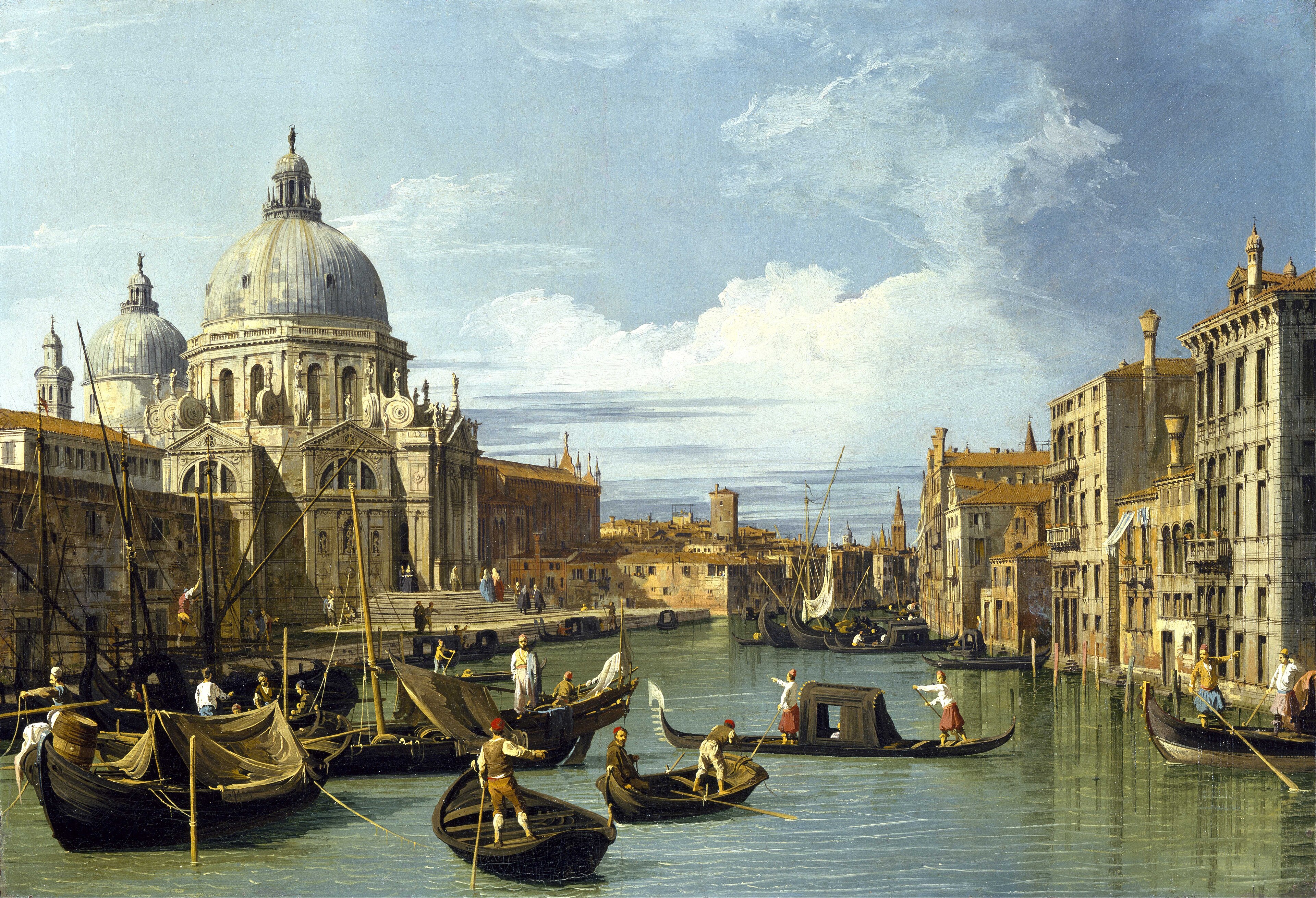
Cover image: The Entrance to the Grand Canal, Venice by Giovanni Antonio Canal, 1730
This piece represents an independent analysis intended to provoke thoughtful consideration of complex issues. Readers are encouraged to share perspectives, counterarguments, and join the discussion in the comments or on our X account at @OccidentalForum. Your contributions help refine these ideas in a spirit of reasoned dialogue.
Comments
Loading comments...
Sign in to comment.